
The World You See Is Built Inside Your Head
Something surprising happens between light reaching your eyes and the world appearing in consciousness.
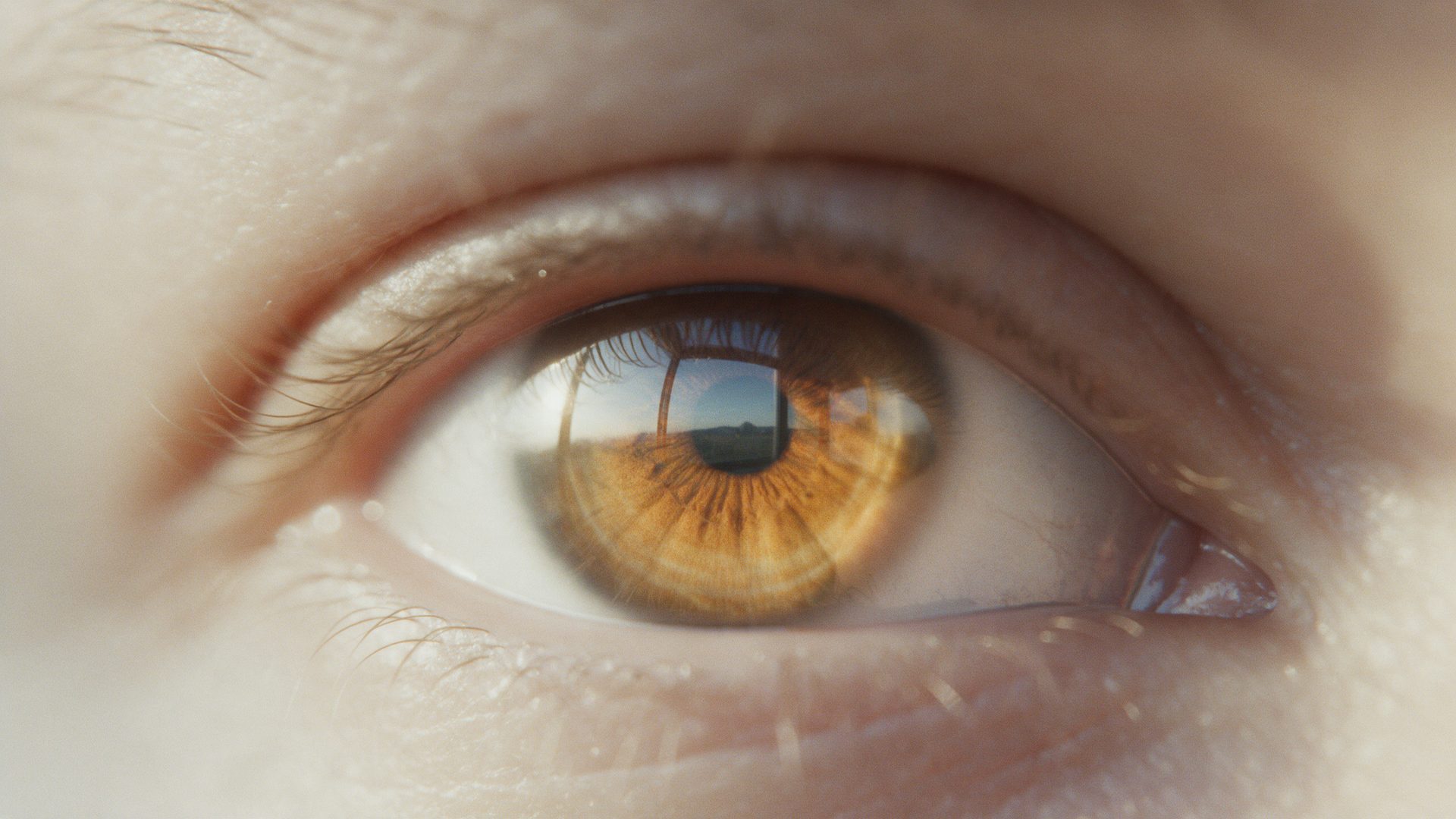
You do not see the world directly. What feels like immediate contact with reality is actually the result of your brain receiving signals, interpreting them and constructing a usable experience from them. The room around you, the face in front of you, the colour of an object and the distance between things all feel as though they simply exist exactly as you experience them, but your conscious experience is the brain’s reconstruction of what is happening outside you.
Light reflected from objects enters the eyes and reaches the retina, where specialised cells convert it into electrical signals. Those signals travel into the brain, where different systems begin processing contrast, edges, orientation, movement, depth and colour. There is no little screen inside the skull where an image appears, and there is no separate observer sitting somewhere inside the brain watching it.
The brain itself creates the visual experience. What you call seeing is what it feels like when this enormous network of neural activity produces a coherent model of the environment. The finished experience arrives so smoothly that you are normally unaware of the calculations happening underneath it.
This means that vision is not simply the collection of information. It is interpretation. The brain receives incomplete and sometimes ambiguous signals, compares them with previous experience, makes predictions about what is likely to be present and continually updates those predictions as new sensory information arrives.
Optical illusions reveal this process particularly well. They work because the brain uses assumptions about light, perspective, movement, scale and surrounding objects to interpret what reaches the eyes. When an image is designed to exploit those assumptions, you can perceive something that is not physically present or misjudge something that is.
The illusion does not show that the brain is badly designed. It shows that perception is active rather than passive. Most of the time, the brain’s assumptions allow it to understand complex scenes incredibly quickly without analysing every piece of incoming information from the beginning.
Colour is one of the clearest examples of this relationship between the world and the mind. An object does not contain the experience of redness inside itself, but instead reflects particular wavelengths of light that interact with the visual system. The brain transforms differences in those wavelengths into the experience humans call colour.
Without a nervous system capable of producing that experience, the physical wavelengths would still exist, but redness as you know it would not. The same principle applies to sound, smell, temperature and touch. The external world provides physical events, while the nervous system transforms those events into experience.
A sound begins as changes in pressure travelling through matter. Smell begins with molecules interacting with receptors, and warmth begins with changes in temperature detected by the body. Yet consciousness does not present these things as pressure waves, molecular interactions or electrical impulses, because the brain converts them into voices, scents, warmth, pain and countless other qualities that feel immediately meaningful.
The brain becomes even more interesting when you close your eyes and discover that you can still produce visual experiences. Imagine a room you know extremely well and picture the doorway, the furniture and the direction from which the light usually enters. None of that light is reaching your eyes at this moment, but your brain can still generate something that resembles seeing.
This ability is part of mental imagery. The brain can reactivate patterns associated with previous perception and use memory to reconstruct parts of an earlier experience. It can also combine those memories into scenes that have never existed at all.
Imagine a purple elephant standing in the middle of your kitchen. You may never have seen that exact scene, yet your mind can combine your knowledge of elephants, kitchens, colour, scale and space into one temporary internal image. The brain is not limited to replaying reality, because it can recombine stored information into possibilities.
This ability may be one of the foundations of creativity. A designer can see the beginnings of an object before it is manufactured, an architect can imagine a structure before anything is built, and a musician can hear a melody internally before it is played. Human beings can experience versions of things that do not yet exist.
The same machinery allows the brain to simulate the future. When you plan what to do tomorrow, you are constructing a possible sequence of events and examining it before it happens. When you anticipate a conversation, rehearse a decision or imagine the consequences of an action, your brain is effectively running models of possible realities.
Memory works in a similar way, although it often feels like opening a stored recording. The brain does not simply retrieve a perfect copy of the past, because remembering involves reconstructing an event from stored pieces of information. This is one reason memories can change, become incomplete or be influenced by information learned later.
Dreams reveal just how far the brain’s world-building ability can go. During a vivid dream, the brain can generate places, faces, movement, voices, emotion and narrative while receiving relatively little useful information from the external environment. A completely invented situation can feel convincing because the same brain that normally constructs waking experience is also capable of constructing an internally generated one.
The difference is that waking perception is continually constrained by reality. If the brain expects a person to be standing behind a door and the door opens to reveal an empty room, sensory information forces the model to update. The external world continually corrects what the brain predicts.
This relationship between prediction and sensory evidence is one reason context changes perception so strongly. The same facial expression can appear threatening in one setting and playful in another, while the same sound can be interpreted differently depending on what you believe produced it. Sometimes an unclear image suddenly becomes obvious after someone tells you what it contains, even though nothing in the image itself has changed.
Your past also participates in what you perceive now. The brain learns patterns over time and uses them to recognise objects, people and situations despite enormous variation. A chair can have many shapes and materials, yet you still recognise it as a chair because your brain has developed a flexible concept rather than memorising one exact image.
Attention adds another layer to the construction. At any moment, more information reaches your senses than conscious awareness can process in detail. The brain selects what appears important, amplifies some signals and allows many others to remain unnoticed.
You may spend months ignoring a particular car model and then begin seeing it everywhere immediately after buying one. The number of those cars may not have changed at all, but your attention has changed what enters awareness. The same thing happens when someone points out a background sound that had been present for minutes without you noticing it.
This means that consciousness does not contain everything available in the environment. It contains a selected and organised portion of it. The brain removes so much information so efficiently that the resulting world still feels complete.
Perhaps the strangest part is that the brain hides almost all of this work from you. You do not experience neurons processing edges, networks predicting depth or memory systems comparing the present with previous encounters. You simply experience a face, a street, a song, a memory or a sunset.
The machinery disappears behind the world it creates. This may be one reason perception feels so direct, because consciousness receives the result rather than the process that produced it. The external world is real, but the world you experience is always that reality after it has passed through the architecture of a nervous system.
Every colour you have ever seen, every voice you have recognised, every place you have remembered and every future you have imagined has appeared through this biological process. The brain does not merely open a window onto reality, because it continuously organises physical information into something that can be experienced. Perhaps its most remarkable achievement is that this construction is so convincing that most of the time we never notice the construction at all.